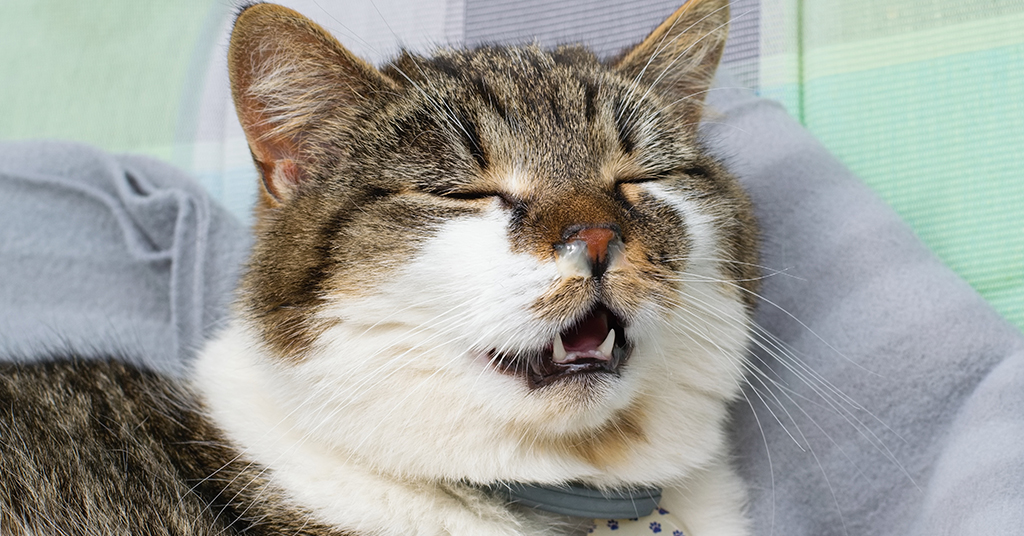
Cat sneezing usually happens because something irritated your cat’s nose, such as dust, pollen, or a strong scent, and an occasional sneeze is rarely cause for concern. Frequent or persistent sneezing, however, can point to an upper respiratory infection, dental disease, a nasal blockage, or another health problem that needs a veterinarian’s attention.
If you’ve caught your feline friend in the middle of a sneezing fit and wondered what’s going on, you’re in good company. It’s one of the most common questions pet owners in Berthoud, CO bring to their veterinary team. In this guide, our team at Berthoud Animal Hospital walks you through the most likely reasons behind cat sneezing, the symptoms that tend to show up alongside it, and the signs that mean it’s time to schedule a visit. Knowing what’s normal and what isn’t helps you act quickly when your cat truly needs care and relax when a sneeze is just a sneeze.
Why Is My Cat Sneezing? The Most Common Causes
Cat sneezing is a natural way of clearing something out of the nasal passages, and the trigger can range from completely harmless to serious. These are the causes veterinarians see most often.
Upper Respiratory Infections
Upper respiratory infections (URIs) are the leading cause of cat sneezing, especially in kittens, recently adopted shelter cats, and cats living in multi-cat households. Feline herpesvirus and feline calicivirus cause the majority of these infections, although bacteria such as Bordetella and Chlamydia can also play a role. These illnesses spread easily through shared food bowls, litter boxes, mutual grooming, and close contact. Many cats that recover from feline herpesvirus carry the virus for life, and stress from a move, boarding, or a new pet can trigger flare-ups that bring the sneezing back months or even years later.
Household Irritants and Allergies
A cat’s nose is remarkably sensitive, so everyday items around the house can set off a sneeze. Common culprits include:
- Dusty or heavily scented cat litter
- Cigarette smoke, scented candles, and wood-burning fireplaces
- Perfumes, plug-in air fresheners, and aerosol cleaning sprays
- Pollen, mold spores, and dust mites
Cats sneeze from seasonal allergies less often than people do, so allergy-related sneezing typically appears alongside other signs like itchy skin or watery eyes.
Dental Disease, Nasal Polyps, and Foreign Objects
Not every cause of sneezing starts in the nose. The roots of a cat’s upper teeth sit close to the nasal passages, so an infected tooth can allow bacteria to spread upward and create chronic sneezing and discharge. Nasal polyps, which are benign growths, can block airflow, and a blade of grass or other small object can become lodged inside the nasal cavity. In older cats, persistent sneezing occasionally signals a nasal tumor, which is one more reason ongoing cat sneezing deserves a professional look.
What Other Symptoms Come With Cat Sneezing?
The symptoms that appear alongside a sneeze often reveal more than the sneeze itself. Watching the bigger picture helps your veterinarian narrow down the cause faster.
Details Worth Noting at Home
A simple log on your phone or a notepad can make your cat’s appointment far more productive. Try to record:
- The color and thickness of any nasal discharge, from clear and watery to yellow, green, or bloody
- Whether discharge comes from one nostril or both
- Any squinting, redness, or crusty buildup around the eyes
- How often the sneezing happens and whether it follows a pattern, like after using the litter box
- Recent changes at home, such as a new litter brand, cleaning product, or pet
Discharge from only one side of the nose, for example, can suggest a localized problem like a tooth root infection or foreign object, while discharge from both sides more often points to an infection.
Why Appetite Matters for Sneezing Cats
Cats rely heavily on smell to decide whether food is appealing. When congestion dulls that sense, many cats lose interest in eating. This matters more for cats than for many other pets, because a cat that stops eating for even a few days can develop hepatic lipidosis, a serious liver condition. Any drop in appetite during a bout of cat sneezing is a strong signal to involve your veterinarian rather than wait it out.
Sneezing, Coughing, or Something Else?
Owners sometimes mistake other sounds for sneezing. A cough, a wheeze, or a reverse sneeze (a rapid, noisy inhalation through the nose) can point to entirely different issues, including feline asthma. A short video recorded on your phone gives your vet a clear look at exactly what’s happening, especially since cats rarely perform on cue in the exam room.
When to See a Veterinarian for Cat Sneezing
Occasional cat sneezing, or a brief spell that resolves on its own, usually isn’t a reason for alarm. Certain patterns, though, call for a professional exam sooner rather than later.
Red Flags That Warrant an Appointment
Schedule a visit if your cat shows any of the following:
- Sneezing that lasts longer than a few days or keeps coming back
- Thick yellow, green, or blood-tinged nasal discharge
- No interest in food for more than 24 hours
- Lethargy, fever, or hiding more than usual
- Swelling on the face, bridge of the nose, or under the eyes
Signs of an Emergency
Open-mouth breathing, labored or rapid breathing, and pale or blue-tinged gums are emergencies. Healthy cats breathe through their noses, so a cat breathing with its mouth open is in significant distress and needs immediate veterinary care. Never give your cat human cold or allergy medications, since many common ingredients are toxic to cats.
Cats That Need Attention Sooner
Kittens, senior cats, unvaccinated cats, and cats managing chronic conditions such as kidney disease, diabetes, or FIV can decline much faster than healthy adults when sick. If your cat falls into one of these groups, don’t wait as long before calling. Our team at Berthoud Animal Hospital can help you decide how quickly your cat should be seen. Call to talk through your cat’s symptoms.
How Do Veterinarians Find the Cause of Sneezing in Cats?
Pinpointing the source of cat sneezing starts with a detailed conversation and a hands-on exam, then moves to targeted testing when the answer isn’t obvious.
The Physical Exam and Health History
Your veterinarian will ask about your cat’s vaccination history, indoor or outdoor lifestyle, recent boarding or exposure to other cats, and any changes in the home. The notes and videos you gathered come in handy here. During the exam, your vet checks the eyes, nose, mouth, teeth, lymph nodes, and lungs, and looks for fever, dehydration, or facial asymmetry that could hint at a deeper problem.
Diagnostic Testing for Persistent Cases
Many mild cases are diagnosed through the exam alone. When cat sneezing is chronic, recurring, or severe, your veterinarian may recommend additional diagnostics. These can include PCR testing from swabs of the eyes, nose, or throat to identify specific viruses or bacteria, along with bloodwork to evaluate overall health. Dental X-rays can reveal hidden tooth root infections, while advanced imaging such as skull radiographs or a CT scan offers a detailed view inside the nasal passages. In some cases, your vet may perform rhinoscopy, which uses a tiny camera to look inside the nose and collect samples.
The Role of Vaccines and Wellness Visits
The core FVRCP vaccine protects against feline herpesvirus and calicivirus, the two most common viral causes of sneezing in cats. Vaccination doesn’t always prevent infection entirely, but it typically makes illness milder and shorter. Routine wellness exams also give your veterinarian a chance to catch dental disease before it affects the nasal passages.
Getting Answers for Your Sneezing Cat in Berthoud
Most of the time, cat sneezing is a short-lived reaction to dust or a strong smell. When sneezing lingers, returns often, or comes with discharge, appetite changes, or breathing trouble, it’s your cat’s way of telling you something needs attention. Paying close attention to the details and reaching out early gives your veterinarian the best chance of finding the cause quickly.
Berthoud Animal Hospital proudly serves cats and their families throughout Berthoud and the surrounding Northern Colorado communities. Whether your cat needs a sick visit, a dental evaluation, or an update on vaccines, our team is here to help your feline friend breathe easier. Call 970-532-2726 to schedule an appointment today.